Currently Empty: $0.00



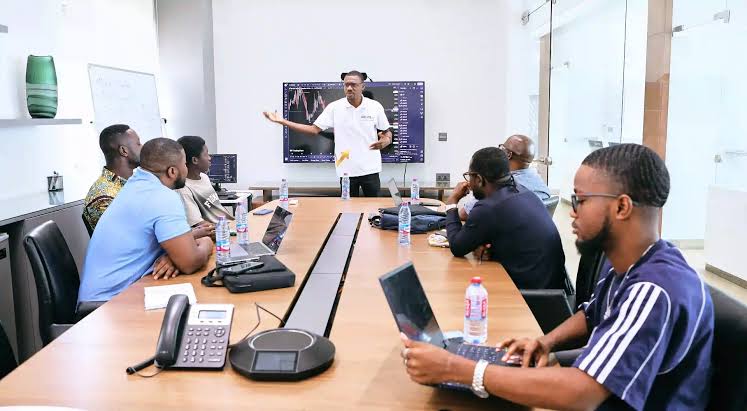
International-standard, competency-based professional training programme for the School of Banking & Capital Markets (SOBACM), Ghana. The programme is a four-level professional pathway — Beginner, Intermediate, Advanced and Professional — progressing from market fundamentals to advanced trading strategies, portfolio risk management and a final professional trading project.
The goal is to equip students with practical skills for analysing and trading global financial markets while preparing them for an internationally awarded professional qualification.
1. Programme overview
| Item | Proposed structure |
|---|---|
| Institution | School of Banking & Capital Markets (SOBACM) |
| Qualification | Professional Diploma in Forex, Commodities, Stocks, Indices & Cryptocurrency Trading |
| Programme code | PDT-CFSC |
| Duration | 16 weeks, with an optional extension for extra practice |
| Study mode | Classroom, online or blended |
| Entry requirement | Basic literacy and numeracy; no previous trading experience required |
| Teaching approach | Competency-based, practical and simulation-led |
| Assessment | Online tests, practical exercises, assignments and final project |
| Target learners | Beginners, aspiring traders, investors and finance professionals |
2. Four-level curriculum

Level 1
BEGINNER — Foundation in Financial Markets
Weeks 1–3 · 3 weeks
Students learn the language of trading, how markets work and how to use trading platforms safely.
- Introduction to Forex and currency pairs
- Introduction to stocks, indices and commodities
- Introduction to Bitcoin and other cryptocurrencies
- Trading platforms, charts, pips, spreads and order types
- Candlesticks, trends and basic technical analysis
- Fundamental analysis and economic calendars
- Demo accounts, trading psychology and basic risk management
Assessment: Foundation examination and supervised demo-trading exercise.

Level 2
INTERMEDIATE — Technical & Market Analysis
Weeks 4–7 · 4 weeks
Students develop structured methods for analysing price movements and identifying potential trade setups.
- Support, resistance and market structure
- Trendlines, chart patterns and candlestick formations
- Moving averages, RSI, MACD and volume analysis
- Multi-timeframe analysis
- Forex sessions, liquidity and volatility
- Stock and index analysis
- Commodity market drivers, including gold and crude oil
- Cryptocurrency market structure and blockchain fundamentals
- Trading plans, entries, exits and stop-loss placement
Assessment: Chart-analysis portfolio and a written trading plan.

Level 3
ADVANCED — Strategy Development & Risk Control
Weeks 8–11 · 4 weeks
Students learn to test trading strategies, evaluate risk and build consistent, rules-based decision-making processes.
- Advanced market structure and price action
- Liquidity concepts and session-based strategies
- Strategy design and backtesting
- Position sizing and risk-to-reward analysis
- Drawdown control and capital preservation
- Correlation across currencies, commodities, stocks and indices
- Crypto volatility, exchange risks and custody considerations
- Trading journals, performance metrics and error analysis
- Automated trading concepts and algorithmic strategy fundamentals
Assessment: Backtesting report, risk-management plan and simulated trading evaluation.

Level 4
PROFESSIONAL — Portfolio, Research & Trading Practice
Weeks 12–16 · 5 weeks
Students integrate the earlier levels into a documented, professional-standard trading and research process.
- Advanced strategy testing and optimisation
- Portfolio construction and asset allocation
- Cross-market analysis and macroeconomic research
- Derivatives, futures, CFDs and leverage risks
- Trading ethics, compliance and market-abuse prevention
- Broker, exchange and counterparty due diligence
- Advanced performance measurement and risk reporting
- Professional trading desk procedures and reporting
- Final capstone: trading strategy, research report and simulated portfolio
Assessment: Professional examination, oral presentation and capstone project.
3. Specialisation tracks
Students should complete the common foundation and select one or more specialist tracks during the intermediate and advanced stages.

Track A — Forex Trading
Currency pairs, central-bank policy, interest rates, economic releases and foreign-exchange risk.

Track B — Commodities Trading
Gold, silver, crude oil and other commodities; supply and demand, futures pricing and volatility.

Track C — Stocks & Indices Trading
Equity fundamentals, earnings, market indices, sector analysis and index-related instruments.

Track D — Cryptocurrency Trading
Bitcoin, crypto market structure, blockchain fundamentals, exchange selection, custody and digital-asset risk.
4. International certification pathway
Certification awarded by SOBACM global awarding partners.
5. Assessment and graduation requirements
- Complete all four levels in sequence.
- Achieve a proposed minimum score of 70% in each level examination.
- Submit chart-analysis exercises and a documented trading journal.
- Pass practical simulations using demo accounts rather than requiring students to risk real money.
- Submit and defend a final trading strategy and risk-management report.
- Complete training in ethics, financial-market conduct and applicable regulation.
Four Progressive Levels. One Professional Learning Journey.
Master the foundations of global financial markets through a structured, practical training programme designed for beginners and aspiring professional traders.
Build your knowledge. Strengthen your analytical skills. Develop professional trading discipline.
SOBACM — Professional Development for Banking & Capital Markets.